Drawing Take-off
HVAC, MEP & Piping Design Services
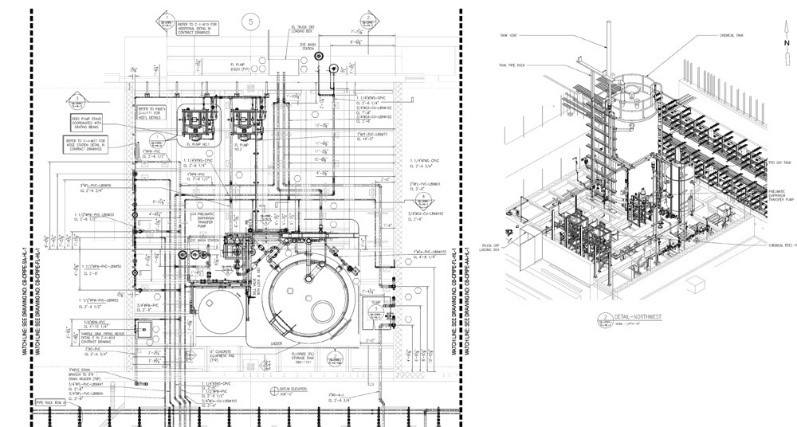
Drawing BOQ Take-off
As the AnZ Waters Team, we have a lot of experience in preparing accurate and detailed BOQ take-offs from drawings.
Our team thoroughly examines all project documents to ensure exact quantity measurements and a clear understanding of the project scope. We follow structured methods and industry standards to keep our work consistent and reliable. Our strong focus on detail helps us avoid mistakes and inconsistencies. We are committed to delivering timely results without losing quality. Through our expertise and dedication, we support effective project planning and execution.
20-Strong Team
A team of skilled engineers, BIM coordinators, and technical drafters who are ready to integrate into your project workflow.
Global Service Delivery
An offshore delivery center based in India serving clients across the USA, Europe, the Middle East, and the Asia-Pacific region, offering up to 40% cost savings.
Multi-Discipline Expertise
We cover Civil, Architectural, Structural, AEC, BIM, HVAC, Mechanical CAD Design & Drafting across all disciplines, all under one roof.
HVAC & MEP Design & Drafting
– Heat load calculations and equipment selection
– Ductwork layout, sizing, and routing
– GA drawings, schematics, and sections
– Tender packages and as-built documentation
– Thermal calculations and system analysis
Piping Design & Engineering
– Pipe routing, sizing, and isometrics
– P&ID development and review
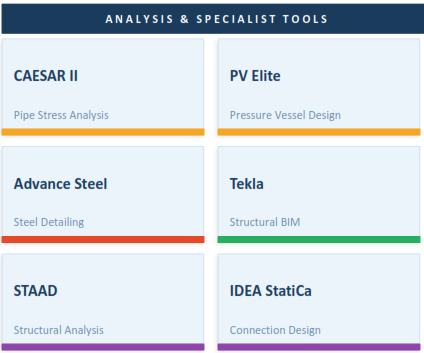
– Stress analysis (CAESAR II / PV Elite)
– Material take-offs and fabrication drawings
– Pool filter systems and process piping
Construction Documentation
– Shop drawing production and review
– Combined services drawings (CSD)
– RFI management and technical support
– Tender-to-handover documentation
– Packaging machinery design support
Modelling & Coordination
– LOD 200–400 federated models
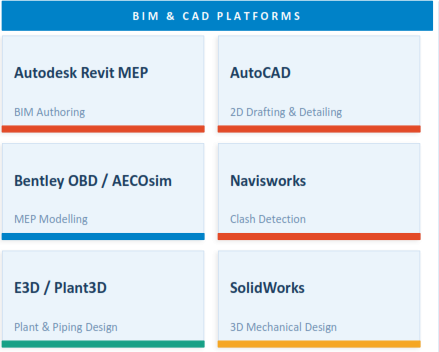
– Revit MEP, E3D & Plant3D authoring
– Multi-discipline coordination and clash reports
– IFC export and COBie data deliverables
– Scan-to-BIM and 4D/5D/6D/7D services
What Are Common HVAC & MEP Design Mistakes?
Common HVAC & MEP Design Mistakes
Thinking ahead when it comes to HVAC & MEP design can save you a lot of time and money in the long run.
In this article, we’ll outline some of the most common mistakes made during the design process and how to avoid them in your next project.
Introduction
Good HVAC & MEP design is crucial for creating comfortable and healthy living spaces.
Without proper planning, things can go wrong—your system might become inefficient or fail, resulting in high energy bills or rooms that don’t cool or heat effectively.
Good HVAC & MEP design is crucial for creating comfortable and healthy living spaces.
Without proper planning, things can go wrong—your system might become inefficient or fail, resulting in high energy bills or rooms that don’t cool or heat effectively.
HVAC & MEP design involves many factors and things can go wrong.
This article will look at common design mistakes and provide tips on how to avoid them. We will cover things like equipment selection, system sizing, insulation, ductwork design, air balancing, and commissioning, among others. Understanding these issues can help ensure your project runs smoothly and provides efficient, comfortable climate control for years to come.
Overview of HVAC & MEP System Design
HVAC (heating, ventilation, and air conditioning) and MEP is one of the most important parts of building design and operation.
Getting it right is essential, but unfortunately, many architects and engineers make common design mistakes. Here are some of the most common errors made in HVAC & MEP design so you can avoid them in your own projects.
Ignoring Energy Efficiency:
Many HVAC & MEP designs use outdated, energy-inefficient technologies. It is important to select high-performance products that maximize efficiency while minimizing environmental impact.
Improper Sizing:
Failing to account for the size of the facility or overestimating heating or cooling load can lead to an inefficient system, as well as increased operational costs due to overworking the equipment.
Overlooking Air Quality Standards:
Most businesses have standards for indoor air quality, but poor HVAC & MEP design can hinder efforts to maintain these standards, leading to significant liability risks for those responsible for designing these systems.
Underestimating Maintenance Requirements:
Regular maintenance is essential for the system to perform optimally and to save on energy costs. However, many designers fail to consider routine maintenance when planning these systems.
By understanding the most common mistakes made in HVAC & MEP design, you can avoid costly errors and ensure your projects run smoothly from start to finish.
Common Mistakes in HVAC & MEP Design
Designing an efficient and comfortable heating, ventilation, and air conditioning (HVAC) system is a complex task that requires knowledge and experience.
While there isn’t a guaranteed formula for successful HVAC & MEP design, there are many common mistakes professionals should be aware of and avoid in order to deliver a quality system.
Failing to Use High-Efficiency Air Filters: Air filters should be changed regularly as per the manufacturer’s recommendations.
When choosing an air filter for a residential or commercial space, it’s important to select one with effective particulate filtration. This helps capture harmful contaminants from the indoor environment before they spread throughout your home or business. Poorly-rated filters are not only inefficient but can also be dangerous, allowing harmful pollutants to circulate.
Using Incorrect Sizes of Heat Registers and Grills: Heat registers and grills must be securely sealed into walls or floors to distribute heat evenly throughout interior spaces.
If installed incorrectly—too large or too small—the openings can disrupt air pressure, causing extra noise as air is forced through improperly sized openings at insufficient rates. These improper installations can also result in uncomfortable drafts and wasted energy due to inefficient heating and cooling airflow caused by reduced pressure.
Failing to Adequately Consider Duct Sizing: Ducts should be properly sized according to load requirements while taking into account dynamic temperature changes throughout the building, host equipment (like fan coil units), airflow needs, and structural details specific to building characteristics such as ceiling heights and hallway lengths between rooms.
Neglecting these factors can lead to inefficient systems and other issues.