Decontamination Technologies
AnZ Engineering specializes in alkaline hydrolysis technology, which is recognized for its ability to destroy and inactivate prion proteins.
This technology is used in their STI AnZ system, which has been validated by the USDA, European Union, and the Canadian Food Inspection Agency. The system is designed to process over 2 billion tons of medical, commercial, agricultural, and other potentially infectious waste worldwide. This offers substantial benefits in reducing or eliminating the handling, transport, and logistics related to waste disposal.
Treat Liquid Waste
Effluent Decontamination Systems (EDS)
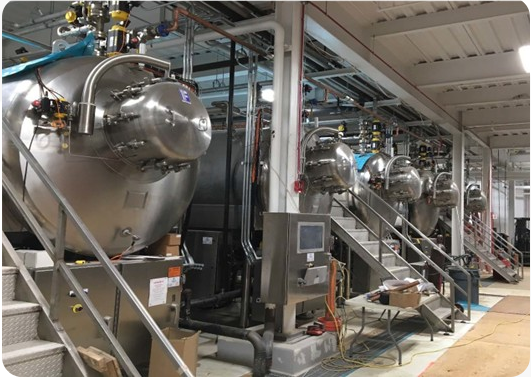
AnZ Effluent Decontamination Systems (EDS) ensure safe and compliant treatment of effluent for high-containment labs and bio-production facilities.
These systems are U.S.-engineered for durability and are supported by expert service, helping to reduce risk and prevent downtime, ensuring that your work continues without interruption.
Designed for Critical Waste Challenges
Our systems are engineered to handle both batch and continuous flow effluent treatment, using either thermal or chemical processes as needed.
They treat liquid waste generated in agricultural, biopharmaceutical, and research facilities, ranging from non-containment to BSL-3 and BSL-4 classifications. The treatable contaminants include:
- Prions: Mad cow disease, scrapie, chronic wasting disease
- Foot-and-mouth virus
- Biological warfare agents (e.g., anthrax)
- Bio-engineered products (recombinant DNA)
- Biological sludge from wastewater plants
- Contaminated water from autoclaves and washers
- Aldehyde-containing fixatives and embalming fluids
- Toxins including cytotoxins
- Low-level radioactive and biological waste
Continuous or Batch
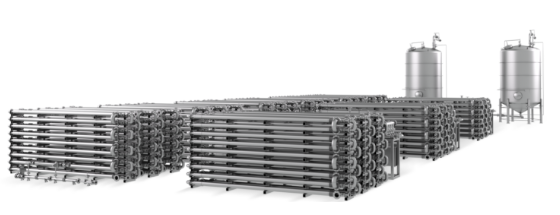
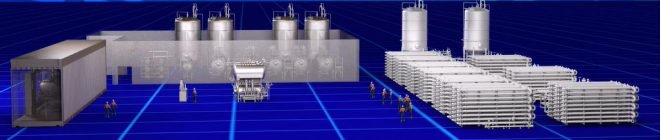
EDS systems can be designed as either continuous-flow or batch-type systems.
The best configuration depends on waste composition, throughput requirements, solids loading, and operational constraints. Both approaches are well-established and validated, offering distinct advantages depending on the application.
Continuous
Continuous EDS systems are designed for facilities with steady waste generation and predictable loading.
By processing material in a constant flow, these systems maximize energy efficiency and minimize the system footprint. Their modular architecture allows throughput to be increased as demand grows, making them well-suited for scalable operations.
- Highly energy efficient
- Small footprint
- Easily scalable
Batch
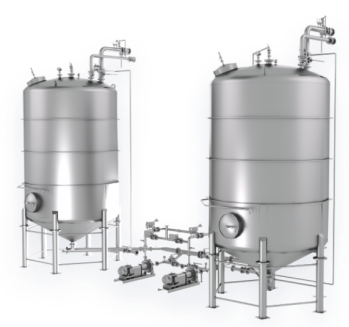
Batch EDS systems provide operational flexibility across a wide range of waste streams and research environments.
They are particularly effective for high-solids or variable inputs where consistent feed conditions cannot be guaranteed. The straightforward design simplifies validation, operation, and long-term reliability.
- Robust performance across a large range of applications
- Ideal for high solids applications
- Simple and reliable design and validation
Thermal or Chemical
EDS systems may operate using either thermal or chemical treatment processes.
The selection is driven by regulatory requirements, waste characteristics, desired throughput, and operational philosophy. Both approaches achieve effective decontamination when properly matched to the application.
Chemical
Chemical EDS systems offer a cost-effective solution with high processing throughput and low energy demand.
These systems are well-suited for facilities prioritizing efficiency and operational economy. Controlled chemical treatment enables consistent performance across defined waste profiles.
- Cost effective
- High processing throughput
- Low energy consumption
Thermal
Thermal EDS systems rely on heat rather than reagents, eliminating the need for chemical handling or storage.
They are suitable for the broadest range of research and waste types, including effluent containing suspended solids. This approach delivers the highest level of treatment efficacy and robustness.
- No chemical needed
- Viable for all types of research
- Can process effluent with solids
- Highest level of efficacy
Effluent Treatment Built to Your Needs
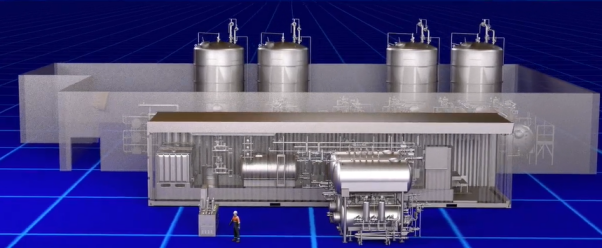
All our EDS systems are custom-engineered to deliver safe and efficient effluent treatment tailored to your facility’s throughput, regulatory, and energy requirements.
Standard features include:
- Closed Loop Processing – Protects users from harmful exposure.
- Heat Recovery Management – Recycles heat from effluent, reducing utility costs.
- Thermal / Chemical Processing Unit – Sterilizes liquid before release to sanitary sewer.
- Backup Sparger – Provides redundancy during maintenance.
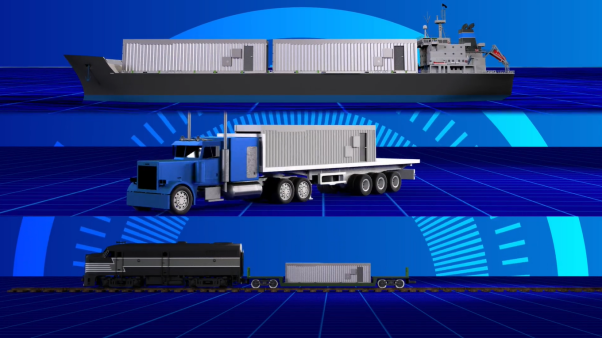
Stationary or Mobile
EDS systems can be deployed as permanent installations or configured for mobility.
The choice depends on facility infrastructure, long-term planning, and contingency needs. Both options meet the same performance standards while serving different operational objectives.
Stationary
Stationary EDS systems are optimized for permanent laboratory or facility installations.
They typically offer lower capital cost and simplified maintenance due to fixed infrastructure and utilities. This configuration is ideal for consistent, long-term operations.
- Lower capital cost
- Ease of maintenance
Mobile
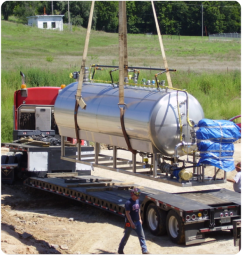
Mobile EDS systems provide rapid deployment capability for emergency response, temporary facilities, or remote operations.
Designed for transportability, they allow treatment capacity to be moved where it is needed most. This flexibility supports continuity of operations during outages or surge events.
- Deployable in an emergency
- Easy to move
Lab Integrated or Building Integrated
EDS systems can be integrated directly into laboratory spaces or centralized at the building level.
Each approach supports compliance and safety goals while addressing different space, workflow, and maintenance considerations.
Lab Integrated
Lab-integrated EDS systems provide point-of-generation decontamination, reducing risk and simplifying waste handling.
They are well suited for retrofitting existing laboratories with minimal renovation. This approach typically requires a smaller initial capital investment.
- Point of generation decontamination
- Easy to renovate existing lab space
- Smaller capital cost
Building Integrated
Building-integrated EDS systems centralize treatment for multiple labs or waste sources.
By consolidating infrastructure, they reduce duplication and create a single point of maintenance and oversight. This configuration preserves laboratory space while supporting higher aggregate throughput.
- Does not take up lab space
- Combines multiple sources into one system
- Single point of maintenance
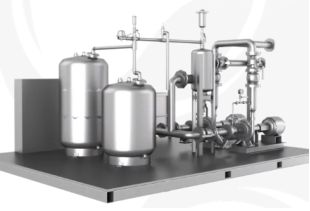
Effluent Decontamination Systems (EDS)
Effluent Decontamination Systems (EDS) are a critical component of laboratory and research infrastructure, ensuring that liquid waste is rendered safe prior to discharge or downstream handling.
Designed to meet the demands of modern research environments, EDS solutions must balance efficacy, reliability, and operational efficiency while integrating cleanly into existing facility workflows.
- Our EDS platforms are configurable across multiple dimensions—including process type, flow architecture, and deployment model—allowing systems to be tailored to the specific needs of each facility.
- Whether supporting continuous, high-throughput operations or flexible batch processing, these systems are engineered to deliver consistent performance under real-world operating conditions.
- By offering both chemical and thermal treatment options, along with stationary and mobile configurations, our EDS solutions support a wide range of applications—from routine laboratory operations to high-containment research and emergency response.